
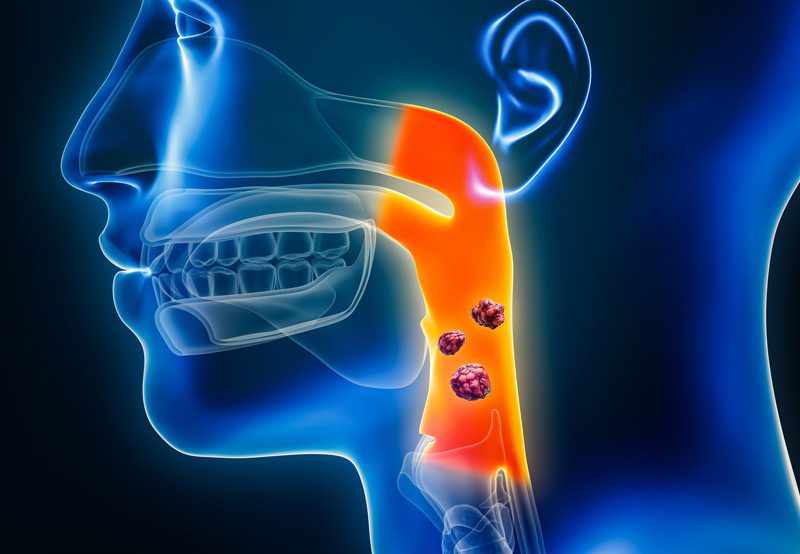

Oropharyngeal cancer refers to malignancies that develop in the middle part of the throat, including the base of the tongue, tonsils, soft palate, and pharyngeal walls. A growing number of these cancers are linked to human papillomavirus (HPV) infection, particularly in younger patients. Treatment is aimed at eliminating the cancer while preserving speech, swallowing, and appearance, often through a combination of advanced surgical techniques, targeted radiation, and participation in clinical trials.
Symptoms of Oropharyngeal Cancer
- Persistent sore throat
- Difficulty swallowing (dysphagia)
- Ear pain on one side
- A lump in the neck
- Voice changes or muffled speech
- Enlarged tonsils, often asymmetrical
- Unexplained weight loss

Diagnosis
Accurate diagnosis involves:
- Physical Exam & Endoscopy: A detailed head and neck exam and visual inspection using a flexible scope.
- Biopsy: Tissue sampling to confirm cancer type and HPV status.
- Imaging: CT, MRI, or PET scans to assess tumor extent and lymph node involvement.
Treatment Options
The goal is to treat the cancer effectively while minimizing long-term effects on speech and swallowing. Several approaches may be used based on tumor size, location, and HPV status.
- Radiation Therapy: Radiation alone or in combination with chemotherapy is a common first-line treatment. Intensity-modulated radiation therapy (IMRT) allows precise targeting of the tumor while sparing healthy tissues. This is especially valuable in preserving function in HPV-positive cancers, which often respond well to radiation.
- Transoral Robotic Surgery (TORS): TORS is a minimally invasive technique in which surgeons use robotic instruments to remove tumors of the tonsils, tongue base, and surrounding areas through the mouth. This approach avoids external incisions, shortens recovery time, and may reduce the need for chemotherapy or radiation afterward.
- Chemoradiation: For more advanced tumors, concurrent chemotherapy and radiation may be necessary to improve tumor control.
- Clinical Trials: Patients with HPV-positive or recurrent oropharyngeal cancers may be eligible for clinical trials that explore treatment de-escalation, novel drug therapies, or improved surgical and radiation techniques. These studies aim to maintain high cure rates while minimizing long-term side effects.
When to See a Specialist
Persistent throat pain, difficulty swallowing, or a neck mass that does not go away should be evaluated by an ear, nose, and throat (ENT) specialist. Early intervention improves outcomes, particularly for HPV-related oropharyngeal cancers, which tend to respond well to treatment. Tailored care plans often combine expert surgical management with advanced radiation techniques and emerging clinical research.