
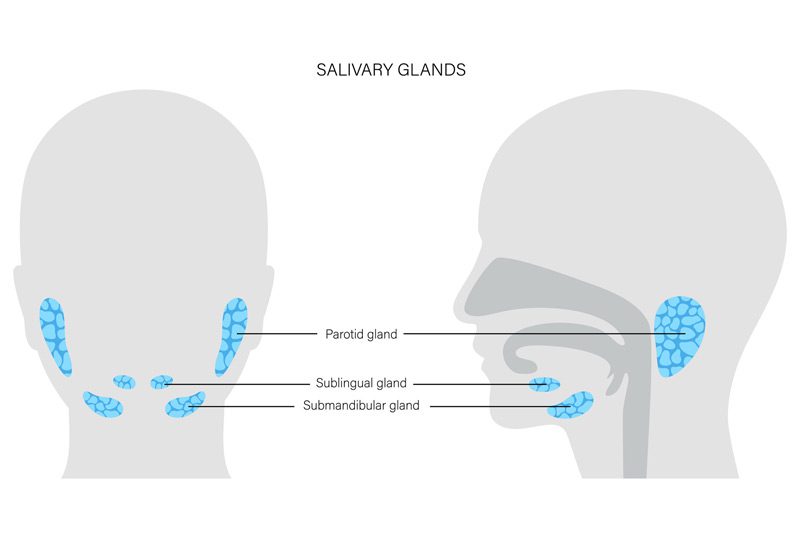
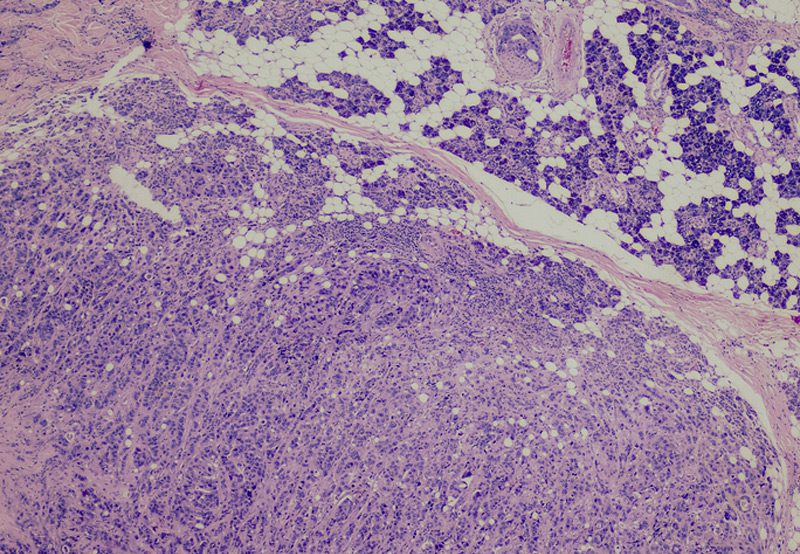
Salivary gland tumors are abnormal growths that arise within the major or minor salivary glands. These glands are responsible for producing saliva and are located in various areas of the head and neck, including the parotid gland (in front of the ear), submandibular gland (beneath the jaw), and sublingual gland (under the tongue), as well as in smaller glands throughout the mouth and throat. While many salivary gland tumors are benign, others may be malignant and require prompt diagnosis and treatment.
Types and Causes
Salivary gland tumors can be benign or cancerous:
- Benign Tumors: The most common benign tumor is a pleomorphic adenoma, often found in the parotid gland. Other benign types include Warthin’s tumor and oncocytoma.
- Malignant Tumors: These include mucoepidermoid carcinoma, adenoid cystic carcinoma, acinic cell carcinoma, and salivary duct carcinoma. Malignancies can occur in any of the major or minor salivary glands.
The exact cause of salivary gland tumors is not always clear, but risk factors may include prior radiation exposure, certain genetic conditions, and a history of smoking (particularly for Warthin’s tumor).

Symptoms
Signs and symptoms of a salivary gland tumor may include:
- A painless lump or swelling near the jaw, neck, or inside the mouth
- Facial numbness or weakness (suggesting involvement of the facial nerve)
- Difficulty swallowing or opening the mouth
- Persistent pain in the gland area
- Drainage or ulceration inside the mouth (more common with malignant tumors)
Diagnosis
Accurate diagnosis is essential and typically involves:
- Physical Examination: Palpation of the neck and face to evaluate the mass.
- Imaging: MRI or CT scans help define the tumor’s size, location, and relationship to nearby structures.
- Ultrasound-Guided Fine-Needle Aspiration (FNA) Biopsy: Allows collection of cells from the tumor to determine whether it is benign or malignant.
- Facial Nerve Evaluation: Particularly important for tumors involving the parotid gland.
Treatment Options
Treatment depends on the tumor’s size, location, and pathology:
- Surgical Removal: The mainstay of treatment for most salivary gland tumors. Surgeons carefully plan the procedure to preserve the facial nerve when possible, especially in parotid gland cases.
- Reconstructive Surgery: May be required to restore facial movement or contour after tumor removal.
- Radiation Therapy: Often used after surgery for malignant tumors or in cases where surgery is not feasible.
- Chemotherapy: Rarely used but may be considered for advanced or metastatic salivary gland cancers.
When to See a Specialist
Any new or persistent lump in the face, neck, or mouth should be evaluated by an otolaryngologist (ENT). Prompt assessment ensures timely diagnosis and helps preserve critical functions such as speech, swallowing, and facial movement. A multidisciplinary team may be involved in managing complex or malignant cases to ensure the best possible outcome.