

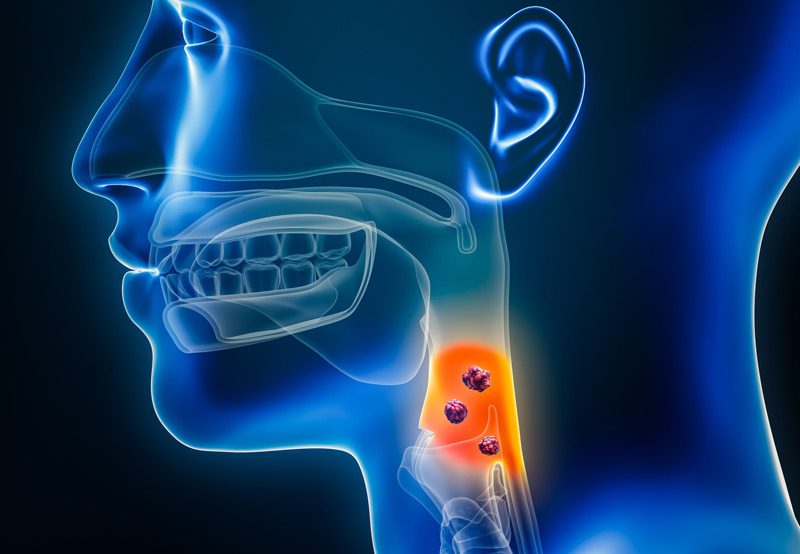
Throat cancer refers to malignancies that arise in the pharynx (throat) or larynx (voice box). Most are squamous cell carcinomas linked to tobacco use, alcohol consumption, and, in some cases, HPV infection. Depending on the tumor’s location and stage, treatment may range from voice-preserving surgery to total removal of the larynx. Expert care and rehabilitation are essential to help patients maintain vital functions like speech and swallowing.
Symptoms of Throat Cancer
Symptoms may vary depending on tumor location but commonly include:
- Hoarseness or voice changes
- Persistent sore throat or cough
- Difficulty swallowing (dysphagia)
- Ear pain or a lump in the neck
- Sensation of something stuck in the throat
- Shortness of breath
- Unexplained weight loss

Diagnosis
Diagnosis typically involves:
- Laryngoscopy: A scope is used to examine the larynx and pharynx.
- Biopsy: Tissue sampling confirms cancer type.
- Imaging: CT, MRI, or PET scans determine the tumor’s size and spread.
Treatment Options
Treatment is personalized based on tumor size, location, and whether the cancer has spread to nearby structures or lymph nodes.
- Pharynx Surgery: Depending on the tumor type and location, surgery may be recommended as part of treatment. This can include traditional or robotic surgery and is aided by advanced reconstruction to maximize speech, swallowing, and appearance
- Larynx Surgery: Surgical removal of the tumor may involve part or all of the larynx (laryngectomy). Whenever possible, ENT surgeons prioritize organ-preserving approaches.
- Partial Laryngectomy: In select cases, a partial laryngectomy can remove the cancerous portion while preserving voice function and the ability to swallow. This procedure requires careful patient selection and surgical expertise but can avoid the need for total voice box removal.
- Total Laryngectomy: For more advanced cancers, complete removal of the larynx may be necessary. After this procedure, patients breathe through a stoma (an opening in the neck). Voice restoration is possible using a voice prosthesis or electrolarynx.
- Radiation and Chemoradiation: Non-surgical candidates or those with certain tumor characteristics may receive a combination of radiation and chemotherapy to shrink or eliminate the tumor while preserving anatomy.
Rehabilitation and Support
Comprehensive rehabilitation is essential to help patients adjust to changes after treatment.
- Swallowing Therapy: Speech-language pathologists work closely with patients to improve or adapt swallowing techniques, especially after partial or total laryngectomy.
- Voice Restoration: Following total laryngectomy, patients can learn to speak again using voice prostheses, electrolarynx devices, or esophageal speech techniques.
- Support Groups: Emotional and peer support play a key role in recovery. Patients are encouraged to participate in support groups to connect with others navigating similar challenges.
When to See an ENT Specialist
If hoarseness lasts longer than two weeks or swallowing becomes persistently difficult, an evaluation by an ear, nose, and throat (ENT) specialist is recommended. Early diagnosis can increase the likelihood of successful treatment while preserving speech, swallowing, and quality of life.