
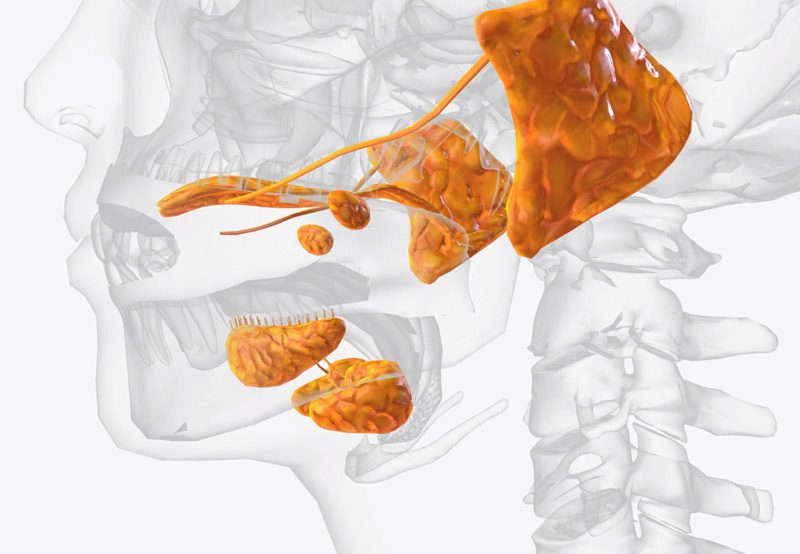
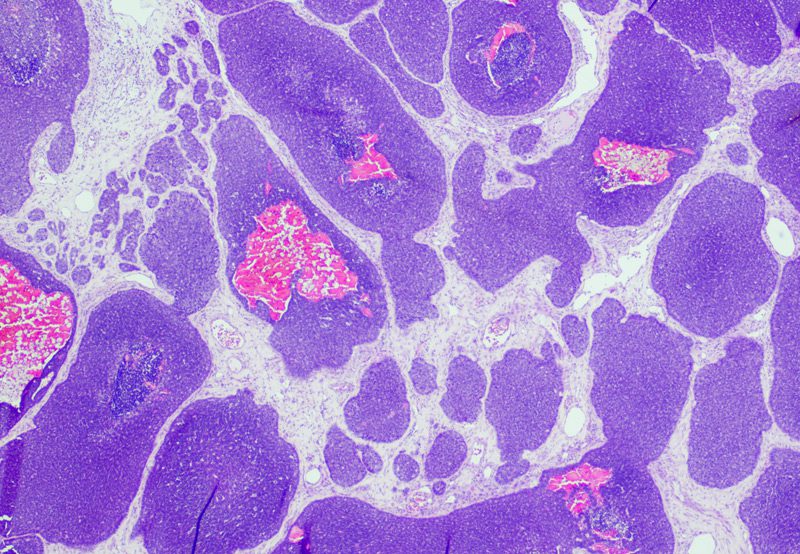
Salivary gland cancer is a rare form of head and neck cancer that originates in one of the major or minor salivary glands, most commonly the parotid gland. These tumors can range from low-grade, slow-growing cancers to aggressive malignancies requiring complex treatment. Because of the close proximity of the facial nerve to the parotid gland, preserving facial movement is a critical focus during diagnosis, surgery, and recovery.
Symptoms of Salivary Gland Cancer
- A painless lump near the ear, jaw, cheek, or neck
- Facial weakness or asymmetry
- Numbness or tingling in the face
- Difficulty swallowing or opening the mouth fully
- Persistent pain in the face or jaw
- Drainage or ulceration in advanced cases

Diagnosis
Diagnosing salivary gland cancer involves:
- Physical Exam: Evaluation of lump size, location, and any signs of nerve involvement.
- Imaging: MRI or CT scans to assess tumor extent and relation to the facial nerve.
- Fine Needle Aspiration (FNA): A biopsy to identify cancer type and guide treatment planning.
- Facial Nerve Assessment: Baseline nerve function testing to plan a nerve-sparing surgical approach.
Treatment Options
Surgery is the primary treatment for most salivary gland cancers, with the goal of complete tumor removal while preserving vital structures.
- Parotidectomy with Facial Nerve Preservation: For tumors of the parotid gland, surgeons aim to remove the cancer while meticulously preserving the branches of the facial nerve whenever possible. Advanced nerve monitoring technology is used intraoperatively to identify and protect nerve fibers controlling facial movement.
- Total or Submandibular Gland Resection: Depending on tumor location, other glands such as the submandibular or sublingual may also require removal. Nearby lymph nodes may be removed if cancer spread is suspected.
- Facial Nerve Reanimation Surgery: In cases where the facial nerve must be sacrificed to achieve full tumor removal, reconstructive procedures may restore movement and expression. These may include nerve grafting, muscle transfer, or dynamic reanimation techniques such as temporalis muscle sling.
- Adjuvant Radiation Therapy: Postoperative radiation is often recommended for high-grade, large, or aggressive tumors to reduce the risk of recurrence.
When to See a Specialist
Any persistent facial mass, particularly in the cheek or jaw area, should be evaluated by an ENT specialist with expertise in salivary gland tumors. Early detection and precise surgical planning are key to achieving cancer control while preserving facial function. For complex cases, a multidisciplinary approach, including reconstructive surgery and tailored radiation, is essential for restoring both health and quality of life.